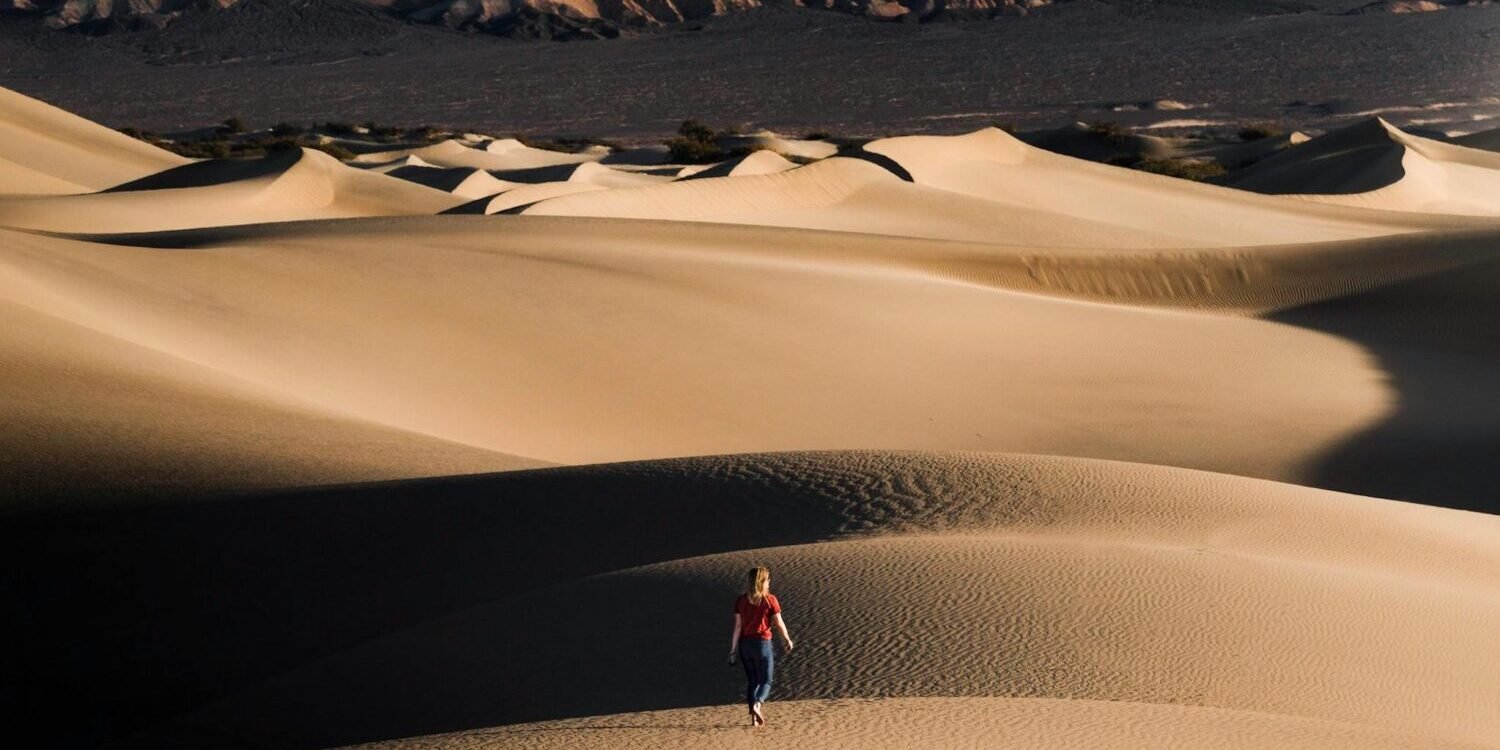
Geographical freedom, nomadic life, a setting of solitude, fear of true connection.
We tick the boxes. New cities, new rooftops, new countries, contracts, missions, flights.
The world map fills up, life seems vast, rich, and ever-changing.
And yet, when you look honestly: no history really crossed to the end in the same city, no link that lived several full seasons, no face associated with a territory we call "home".
One day, it loses all its exotic appeal:“Do I travel to experience life more intensely… or to prevent someone from truly entering my real life?”
1. A life in motion, dotted links
Mobility began as a conquest: refusal of imposed commutes, closed offices, fixed agendas. We chose time zones, locations, missions and collaborations.
On paper, relational freedom is all that's needed: you meet people everywhere, you joke about having "stories" in Bangkok, Lisbon, Montreal, Palermo, Dubai. Conversations drag on on WhatsApp, reunions are arranged "on the next stop," and the initial sparks fade between flights.
In reality, many of these links remain fixed in the same place:
– a city associated with a first name,
– a bar associated with a “little flirt”,
– a hotel room associated with an intense weekend, never to be repeated.
Life moves on. Countries change. Stories remain in draft form.
2. What geography does to the real link
It's not just a matter of logistics or distance.
The very structure of this mobile life maintains an inner position: one always remains on the edge, ready to leave again.
We let others adapt to our dates, our stopovers, our travels.
We decide when we arrive, when we leave, and when we respond.
We retain the initiative, control over the rhythm, and the ability to step outside the framework at any moment.
Under these conditions, a link struggles to gain depth:
– everyday life never happens together in the same city,
– the tensions don't have time to mature, to resolve themselves,
– projects for two remain on hold, in a “maybe someday” zone.
We believe we are protecting freedom.
Often, an implicit rule is maintained:
No one should have enough power to influence a trajectory that has already been set.
3. When the scenery of freedom reveals true solitude
The most brutal signal is not in airports, nor in photos. It comes in moments of upheaval: a magical moment, an illness, a professional failure or success, a night without a scheduled flight.
At that moment, we realize:
– no one really knows our problems, our location,
– no one shares these moments as a common memory,
– no one inscribes their own trajectory in ours over a long period of time: in fact, we don't really matter to anyone.
We have contacts everywhere, but no intimate roots anywhere. Multiple, solid social circles, but no presence that spans the years with us. A life saturated with evidence of movement, and very few lasting emotional traces.
Freedom then begins to take on a different hue: no longer just a conquered space, but a setting that conceals a form of desert.
4. Turning mobility into an alliance ground
The solution lies not in giving up, but in deciding: what do we want to do with this geographical freedom?
Here are a few concrete guidelines for transforming a setting into a bonding ground:
- Choosing places, not just destinations
We can continue to travel, work internationally, and live in several places.
The difference is made when we decide that a place becomes a base, a recurring meeting point, a territory where a connection can breathe over several cycles. - To give the other a clear place on the world map
Not “if you can, we’ll meet up”.
Rather: “we meet at such and such a time, in such and such a city, we give ourselves some real time together, we see what it builds”.
The other no longer becomes a parenthesis in a schedule, but an assumed parameter of the trajectory. - Testing everyday life, even in its short form
A full week in the same city, at the same pace, reveals more than a year of scattered dates.
We see how each person manages fatigue, logistics, unforeseen events, and the coexistence of schedules.
We observe whether living as a couple amplifies freedom, or whether it creates an immediate feeling of suffocation.
Conclusion
true freedom includes the ability to let yourself be reached.
Mobility gives power: The power to choose where you live, who you sign contracts with, how you work.
The real test comes when we add an extra variable: the space given to a link that really matters.
We can continue to travel the world solo, with elegance, and fully embrace it.
We can also decide that freedom now includes something else: the possibility for someone to walk beside us, to share a territory, to co-write part of the trajectory.
The verdict was simple and decisive:“Is my life truly free, or merely untouchable? Do I want a collection of fleeting moments, or a presence that remains, that journeys through the years with me?”
If you feel your world map is full, yet your relationship history remains unresolved, book a time slot:
Access to Click
You leave your first name, your email, you click.
The future won't wait for you.
The 5 pitfalls of Smart Singles
Why brilliant people never meet — and how to reverse the trend. The guide, free.
Receive the guide